

In today’s digital-first world, parents and educators often face an important question: Should children learn with printable storybooks or digital storybooks? Both formats have clear benefits, and choosing the right one can significantly impact a child’s reading habits, focus, and learning outcomes.
In this guide, we’ll break down the differences between printable and digital storybooks for kids, compare their learning benefits, and help you decide which option works best for your child.
What Are Printable Storybooks?
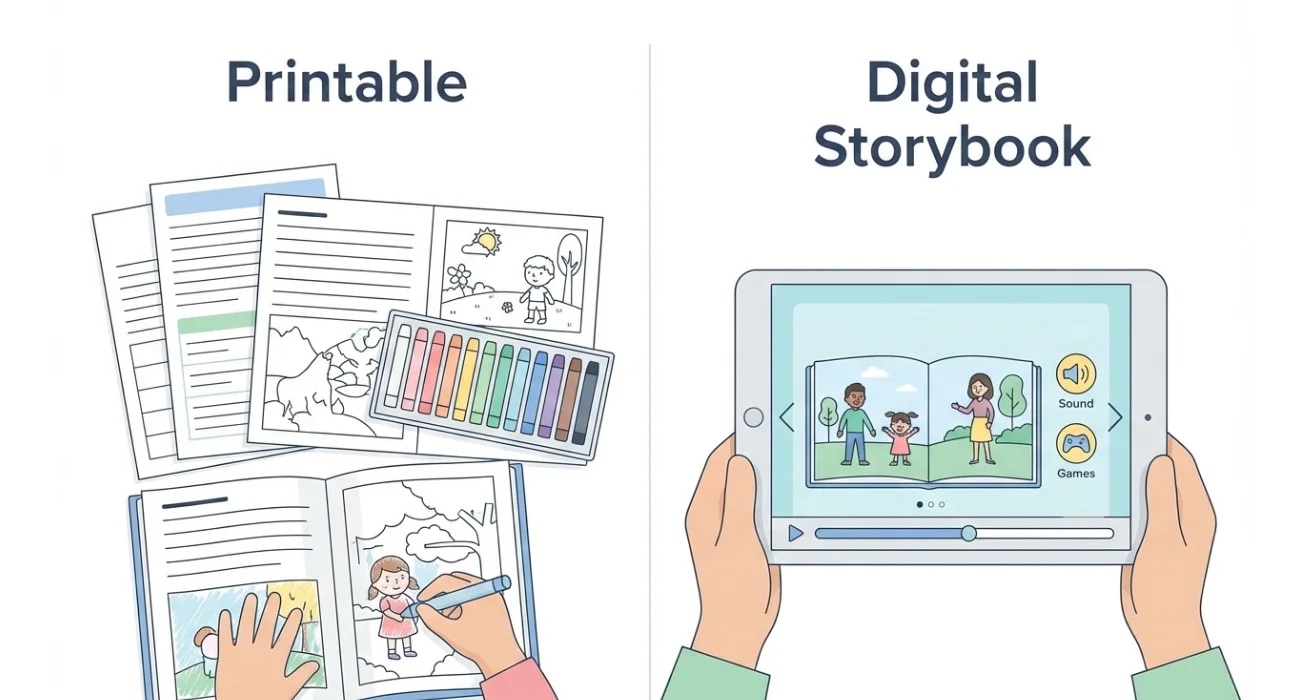
Printable storybooks are downloadable PDF or printable files that parents or teachers can print at home. These books usually include:
Short stories with illustrations
Phonics-based reading material
Coloring and activity pages
Age-specific vocabulary exercises
Printable storybooks are especially popular for early learners and preschool kids, as they provide a hands-on reading experience.
Benefits of Printable Storybooks for Kids
✨ Improves focus and attention span
✨ Reduces screen time
✨ Encourages parent-child interaction
✨ Helps develop fine motor skills (coloring, tracing)
✨ Easy to reuse and customize
Printable books are ideal for structured learning environments, such as homeschooling or classroom use.
What Are Digital Storybooks?
Digital storybooks are e-books designed to be read on mobiles, tablets, laptops, or e-readers. Many modern children’s e-books include:
Interactive animations
Read-aloud narration
Sound effects and background music
Clickable illustrations
Digital storybooks are gaining popularity because they are convenient, engaging, and portable.
Benefits of Digital Storybooks for Kids
📱 Highly engaging for reluctant readers
📱 Supports audio-visual learning styles
📱 Easy to carry multiple books in one device
📱 Adjustable text size and brightness
📱 Interactive elements improve comprehension
Digital storybooks are especially effective for visual learners and older kids.
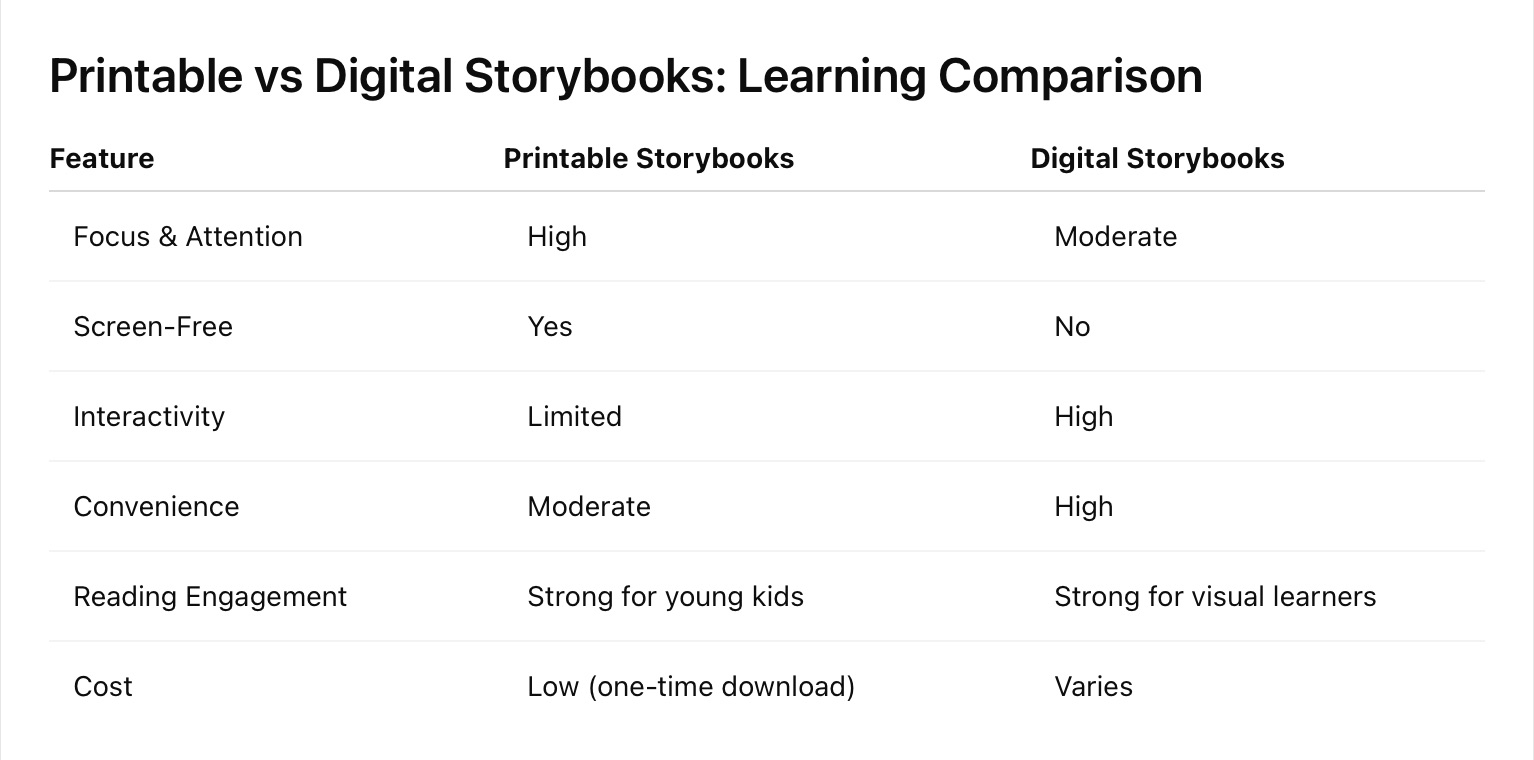
Which Is Better for Children’s Learning?
The answer depends on your child’s age, learning style, and daily routine.
Printable Storybooks Are Better If:
Your child is 3–6 years old
You want to reduce screen exposure
Your child enjoys coloring and activities
You prefer guided reading sessions
Digital Storybooks Are Better If:
Your child is 6+ years old
Your child enjoys animations and audio
You travel often or need portability
Your child struggles with traditional reading
👉 Best approach: A balanced mix of both formats works best for most children.
How Parents Can Use Both Formats Together
To maximize learning outcomes:
Use printable storybooks for daytime reading and practice
Use digital storybooks for bedtime or travel
Encourage discussions after reading
Limit digital reading time to avoid overstimulation
This hybrid approach helps children develop strong reading skills while staying engaged.
Why Digital Marketplaces Are Ideal for Children’s Storybooks
Online digital marketplaces make it easier for parents to:
Access age-appropriate storybooks
Download instant printable PDFs
Buy interactive digital e-books
Explore comics, coloring books, and learning bundles
Platforms like NinthKart offer a growing collection of children’s e-books, printable storybooks, and comic content, making learning accessible and affordable.
Final Thoughts
Both printable and digital storybooks play an important role in children’s education. Printable books strengthen focus and foundational skills, while digital storybooks boost engagement and accessibility.
The key is choosing the right format at the right time — and giving your child a love for reading that lasts.
📚 Explore children’s storybooks, comics, and learning e-books on NinthKart and make reading fun every day.